Reviewed · PRIVATE
The Ultimate Jordan Experience – 8 Full Days Private Tour
This is an interesting way to see Jordan because you get a tight mix of big names and real nature, in a private setup that keeps your days moving without feeling rushed. I especially like the private, driver-led logistics (so you are not fighting timing or taxis) and the licensed Petra guide plus the Wadi Rum sunset jeep safari, which turns those highlights into actual experiences, not just photos. You should know one possible drawback: entrance fees and optional activities are extra, and the long drives mean you will want good shoes and patience.
A lot of the best moments come from the small, well-chosen stops, like the wildlife sanctuary Al Ma’wa and the Dead Sea beach setup, not only from the famous monuments. If you have your heart set on paying for almost nothing on the spot, plan around that. Also, some sites involve heat and sun, so even on a private itinerary you’ll still want to pack smart (hat, water, sunscreen).
Key Things That Make This Jordan Trip Work
- Private vehicle with an English-speaking driver to connect major regions without hassle
- Licensed local guide in Petra so you do not wander in the wrong direction
- Wadi Rum sunset jeep safari (2 hours) timed for the best light
- Al Ma’wa wildlife sanctuary with lions, tigers, and bears in a forested hillside setting
- Dead Sea time built around private beaches where facilities are available
- Desert reserves on the last day at Shaumari and Azraq for animals and birdlife
Private 8-Day Jordan Planning That Actually Feels Relaxing

Jordan is compact on a map, but it can feel big once you start driving. This tour solves the biggest travel pain point: logistics. You ride in a private vehicle with an English-speaking driver, and the schedule is built around major regions rather than chaotic day-to-day planning.
One of the best parts is that the trip is designed to feel varied. You spend time on big Roman and Byzantine sites, then you trade that for crusader castles and desert scenery. You finish with wildlife reserve time, plus desert castles that look like they were dropped onto the horizon from another century.
And if you care about smooth communication, the experience seems strong on that front. Past travelers highlight Diya as responsive during planning, and many mention a driver named Yousuf for safe, steady driving. That matters in Jordan, where road conditions and distances can be a reality check if you try to DIY it.
The other reality check: even though accommodations and key experiences are included, you still need to handle site entrance fees and some optional activities. If you show up assuming everything is covered, you’ll be surprised. But if you plan for it, this itinerary gives good value for an 8-day private circuit.
A few more Amman days worth comparing
- Amman: Petra, Wadi Rum, and Dead Sea 2-Day Tour
★ 4.9 · 1,173 reviews - 2-Day Tour: Petra, Wadi Rum, and Dead Sea from Amman
★ 5.0 · 1,141 reviews - From Amman: Petra & Wadi Rum Private or group Day Tour
★ 4.9 · 750 reviews
Amman in One Day: Mosque Mosaics, Citadel Views, and Roman Theater
Day one gives you an efficient intro to Amman, with cultural stops that also help you understand how the city layers time.
King Abdullah Mosque, also called the Blue Mosque
This is where the tour starts with something visually memorable and immediately different from the typical ruin-hunt. The mosque was built between 1982 and 1989, and it is known for its blue mosaic dome. You can pray inside, and the space is designed for a large crowd.
Dress rules matter here. Men need long trousers, and women are expected to cover their heads, arms, and legs. Plan to bring something easy to wear that meets the rules, because it is not the kind of place you can improvise at the last second.
The Citadel: Temples, palaces, and what’s still not excavated
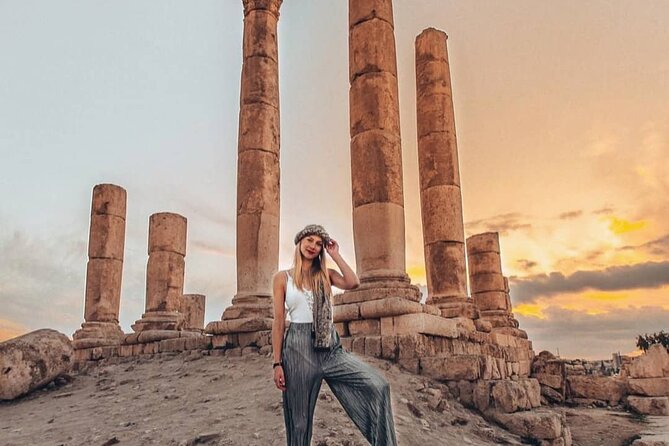
Next you move to the Citadel, a site with occupation stretching through multiple civilizations. You will see major buildings linked to the Roman, Byzantine, and Umayyad periods, including the Temple of Hercules, a Byzantine church, and the Umayyad Palace.
One detail worth appreciating: not everything is excavated yet. That gives the Citadel a more honest feel. It’s not a perfectly finished museum set. It’s a working archaeological landscape.
A different kind of day out of Amman:
- From Amman: Petra and Wadi rum Full day Tour
★ 5.0 · 538 reviews - 2-Day Petra, Wadi Rum and Dead Sea Tour from Amman
★ 5.0 · 467 reviews - 3-Day Private Tour from Amman: Petra, Wadi Rum, Dana, Aqaba, and Dead Sea
★ 5.0 · 425 reviews - Petra Full-Day Private Tour from Amman
★ 4.9 · 392 reviews
Roman Theatre: still used today
The Roman Theatre is quick but powerful. It once held about 5,000 spectators, and it is still used for theater and entertainment. If you like places that bridge ancient and modern life, this stop delivers.
Jordan Museum: your orientation shortcut
The Jordan Museum sits in Amman’s Ras al-‘Ayn downtown area and is designed to give you context. It is focused on Jordan’s history and cultural heritage through well-designed galleries.
If you want to get more out of the ruins later, this is a practical stop. You walk out with a better framework for what you are seeing.
Jerash and Ajloun, Then Al Ma’wa for Wildlife You Can Actually Observe
Day two shifts from city heritage to imperial-era grandeur and then into nature and conservation.
Jerash Ruins: the big colonnaded avenue feeling
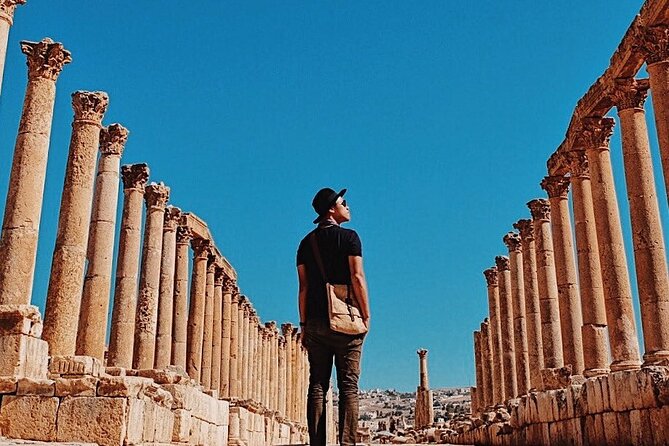
Jerash is a standout in Jordan for a reason. You get ceremonial gates, temples, theaters, and colonnaded avenues that make the scale feel real. Even if you are not an archaeology fanatic, the ruins are organized enough that your brain can keep up.
Do not underestimate sun. The ruins are exposed, and in warmer months you’ll want a hat and sunscreen. Because it is a private setup, you can also pace yourself better than you would on a group tour.
Ajloun Castle: views plus a strategic story
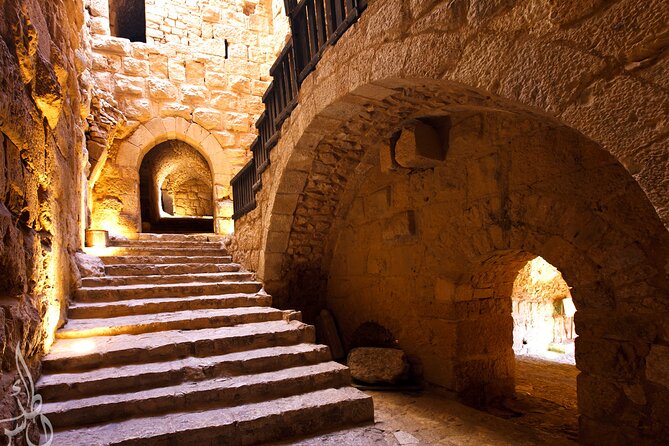
Ajloun Castle sits on Mt ‘Auf at 1250 meters, built between 1184 and 1188 by ‘Izz ad Din Usama bin Munqidh, a general under Saladin. The location is the point. From the castle you get views of the Jordan Valley and three wadis.
This stop helps you connect the dots between geography and history. The castle was part of a defensive chain against Crusaders, so the view is not just pretty, it is strategic.
Al Ma’wa for Nature and Wildlife: a conservation stop with real animals
This is one of the most moving stops on the whole circuit. Al Ma’wa is a sanctuary outside Jerash, supported by the Princess Alia Foundation and Four Paws. The sanctuary covers 140 hectares, and large animals live in enclosures across 75 hectares.
The animal list is specific: 17 African lions, 2 Bengali tigers, 2 Syrian brown bears, and 2 Asian black bears. You are not just seeing a signboard about conservation. You are observing animals that have been given care and protection.
It is also a good moment to slow down. You spend about three hours here, and it provides a strong contrast to castle walls and city ruins.
Dead Sea Reset, Mount Nebo’s Big View, and Madaba’s Mosaic Walk
Day three is built for a mix of relaxation and spirituality, plus one of Jordan’s most walkable towns.
Dead Sea region: float time with a private beach reality
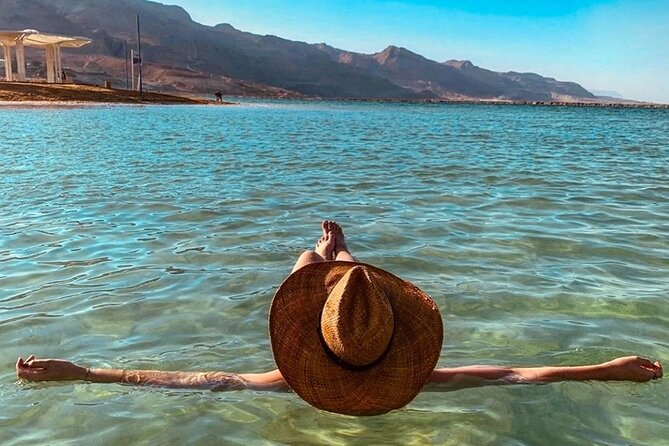
You get two hours in the Dead Sea region, which is the earth’s lowest point at 428 meters below sea level. It is famous for how salty it is, which makes floating easy and is why people link it with skin-related benefits.
Just know the logistics: to access the beach and facilities, you enter one of the private beaches. Entrance fees start from 25 JD per person. That is not optional if you want toilets and showers, so budget for it.
Tip: treat the water like a choreographed experience. Keep it out of your eyes and do not forget a rinse after.
Mount Nebo: Moses’ promised-land view
Mount Nebo is associated with Moses seeing the Promised Land, and from the summit you get panoramas of the Holy Land. On a very clear day, Jerusalem can even be visible.
There is also time for lunch at a Lebanese-style restaurant. That’s a small detail, but it matters on a day that mixes sun, viewpoint walking, and driving.
Madaba: the mosaics town you can explore on foot
Madaba is a smaller, friendly town with Byzantine mosaics decorating churches and buildings. You’ll likely enjoy the atmosphere of shops and marketplaces in between historic stops.
Madaba is also known for religious harmony between Muslim, Catholic, and Greek Orthodox communities, and it is an easy place to get a meal without needing to hunt for anything fancy. This is the kind of stop where you can wander for an hour or two without feeling lost.
Karak and Shobak Castles, plus Feynan and Wadi Dana Views
Day four turns toward crusader strongholds and Jordan’s nature reserve areas. It feels different from the first half because the terrain and the forts do more storytelling than any museum can.
Karak Castle: one of the big crusader strongholds
Karak Castle is a 12th-century crusader stronghold in central Jordan. It is described as one of the largest in the Levant. You spend about 1.5 hours here, so it’s enough time to absorb the fort shape and the “how did they live here” feeling.
Mujib Dam viewpoint stop
There is also a quick viewpoint stop for Mujib Dam. It is not the kind of stop where you linger for hours, but it helps connect you to Jordan’s water and irrigation story.
Shobak Castle: remote, layered, and full of small surprises
Shobak Castle sits atop a mountain and was built in 1115 under King Baldwin. The remote desert setting makes it feel like a different world.
Inside the grounds, you can explore churches and ruins, plus a secret passageway that leads to a spring. It also includes a watchtower, catacombs, and Christian carvings alongside Islamic tablets. It is a stop that rewards curiosity, not speed.
Feynan area and the edge of Wadi Dana
In between, you stop in the village near Tafilah in the Feynan area, right on the edge of Wadi Dana, with views over Wadi Araba. This area hosts the Dana Biosphere Reserve, one of Jordan’s prime nature reserves for ecotourism.
You might not spend full-day hiking here, but the viewpoint context is useful. It helps you see why these places are protected.
Petra with a Licensed Local Guide: The Walk In and the Smart Way to See It
Petra is the kind of place that can eat your whole day, or it can become a blur if you do not structure it. This tour handles that key detail with a licensed local guide.
The approach: easy hike, steep rock cliffs
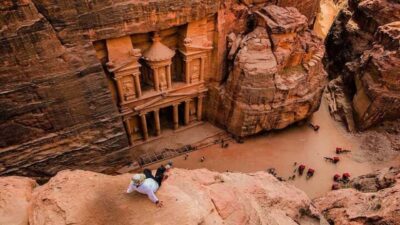
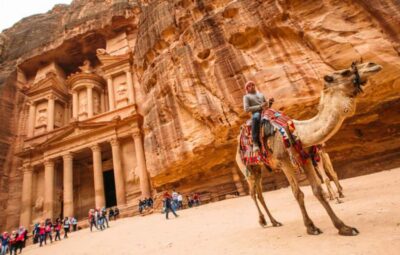
You approach Petra by walking a simple 1 km path through steep rock cliffs. It is short, but it feels dramatic. It’s also the best kind of warm-up, because it puts you inside the story before you even reach the main area.
Wear comfortable shoes and bring a hat. Carry plenty of water. Petra can be hot, and you’re walking in exposed areas.
What you see once you arrive
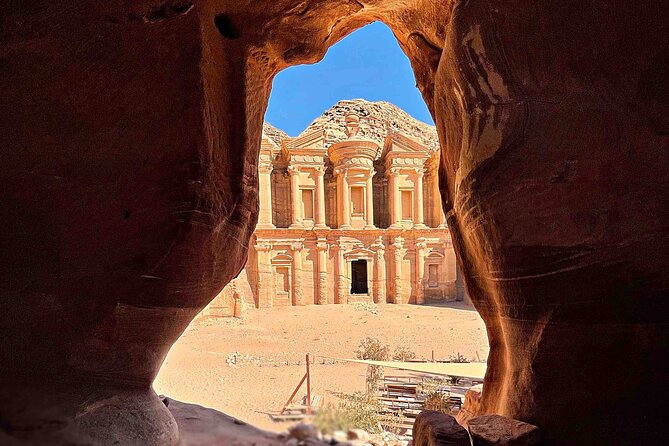
You get about four hours at Petra. Your guide helps you focus on major highlights like:
- Hundreds of tombs carved into rock reliefs
- A Roman-style amphitheater
- A Nabataean monastery
- The Treasury
This is not a “see one thing and rush out” plan. The licensed guide is the difference between walking around and actually understanding what you are looking at.
Aqaba Stopover and the Move South to Wadi Rum Sunset
After Petra, the tour takes you to Aqaba for an overnight. Aqaba is a quieter beach city compared with the inland sites, so it works as a reset before the desert takes over.
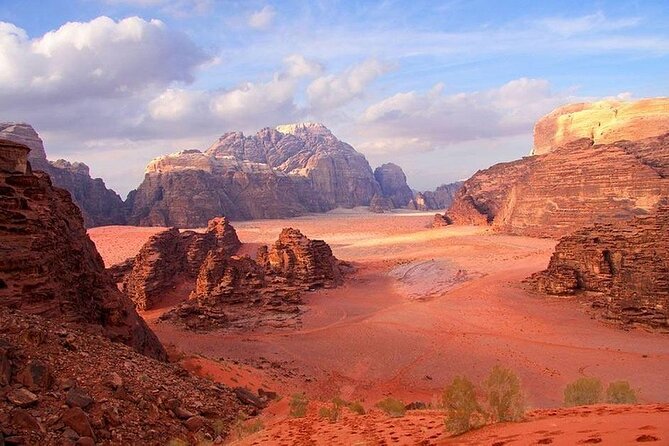
You head to Wadi Rum in the afternoon the next day, aiming to arrive in time for sunset. That timing is built in, and it is a big deal. Light at sunset makes the rocks look like they are glowing from inside.
Wadi Rum: the 2-hour jeep safari
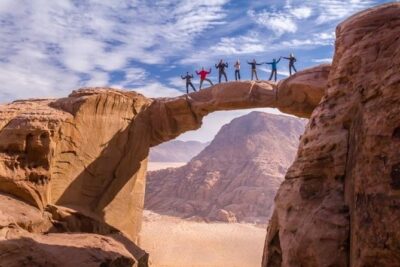
The tour includes a sunset jeep safari in the Wadi Rum protected area for two hours. You get the classic desert-feeling ride, with views that shift as the dunes and rock formations change color.
Even if you have seen desert photos before, Wadi Rum is one of those places where it becomes real fast. You are surrounded by scale, and the silence feels earned.
Amman by Noon, Then a Half-Day of Choice in the Desert
On the way back, you return to Amman by noon and then you get a half-day free window. That setup is smart. After intense days south, you have a block of time that you can treat like a palate cleanser.
There are also optional activities you can arrange for an extra fee, such as:
- A hike to a viewpoint mountain
- Horse ride or camel ride
- A 4-hour jeep tour
- A self-walk at cool canyons
If you want to keep things easy, you can just use the time to recharge. Private touring works best when you do not feel forced into every add-on.
Shaumari Nature Reserve: Desert Wildlife and Optional Jeep Time
The final day starts with Shaumari Nature Reserve. It began as a breeding center for endangered or locally extinct wildlife, and it now functions as a thriving protected environment over 22 square kilometers.
You will see species including oryx, ostriches, onagers, and gazelles. If you want closer animal viewing, there is an optional jeep safari you can arrange inside the reserve. That specific jeep safari is not included in the tour price, so think of it as a decision point: pay extra for the closer encounter, or enjoy the walking experience.
This stop gives the trip a fitting ending. After castles and carvings, you finish with life that survived in the same harsh regions that built empires.
Azraq Wetland Reserve: Birds on a Marsh Trail and a Bird Hide
Next comes Azraq Wetland Reserve, an oasis and nature reserve for migratory birds. It was established in 1978 and covers 12 square kilometers.
You walk the marsh trail and see both dry and wet areas. The boardwalk leads to a viewing platform overlooking springs that once released large volumes of water into the marshland. You then move over an ancient black basalt wall, believed to be linked to the Umayyad period, and finish at a bird hide made from local mud and straw.
This day is a good reminder that Jordan is not only deserts. It has water systems and seasonal bird migrations, and Azraq is one of the most direct places to experience that.
Qasr al-Harraneh and Qasr Kharana: Desert Castles with Umayyad Details
You end with two desert castles that feel like stepping into early Islamic-era architecture.
Qasr al-Harraneh (UNESCO World Heritage)
Built in the early 8th century, Qasr al-Harraneh is exceptionally well-preserved. It served as a fortress with a garrison and also as a residence for Umayyad caliphs.
The key feature is the rich interior decoration, especially the reception hall and hammam, with figurative murals that reflect secular art of the time. Your time here is about 45 minutes, so it’s enough for main rooms and a solid read of the style.
Qasr Kharana (Qasr Al-Harranah): early Islamic, purpose still debated
Qasr Kharana is one of the best-known desert castles in eastern Jordan, about 60 kilometers east of Amman. It is considered one of the earliest examples of Islamic architecture in the region.
The “castle” term is a bit misleading, since the internal layout does not suggest military function, and the wall openings do not clearly fit arrow-slit use. The purpose is uncertain, with possibilities including a caravanserai or trader resting place, though it lacks the nearby water sources you’d expect for that type of building.
This pair of castles works well because together they show continuity and change. You go from Umayyad comfort and decoration to a different early Islamic architectural logic.
Price and Value: What You Get for $1,260 Per Person
At $1,260 per person for about eight days, this tour is not budget travel. But for a private circuit that includes 7 nights of accommodation, private transportation, an English-speaking driver, 6 breakfasts, some lunches and dinners, plus a licensed Petra guide and a 2-hour Wadi Rum sunset jeep safari, the price starts to make sense.
Where you need to manage expectations is entrance fees and add-ons. The tour does not include entrance tickets for sites or activities, and the Dead Sea requires private beach access. The tour suggests using the Jordan Pass to handle entry fees efficiently.
If you like the idea of seeing major sites without constant logistics stress, a private plan is often worth paying for. If you are the type who enjoys planning, negotiating, and ticket juggling, you could build a cheaper DIY trip. But you will spend more time solving problems on your own.
Who This Jordan Tour Suits Best
This experience is a strong match if you:
- Want a private setup with an English-speaking driver and a guide in Petra
- Prefer a fixed plan that still leaves a half-day breathing window back in Amman
- Like mixing monuments with nature, including conservation and bird areas
- Would rather pay for convenience than spend extra time coordinating transportation and tickets
It may not be the best fit if you:
- Want every single entrance fee and meal fully included
- Hate long road days and early starts
- Plan to skip optional activities entirely and still assume there will be no extra costs
Should You Book This Private 8-Day Jordan Experience?
If your dream trip includes Petra, Wadi Rum, the Dead Sea, and Jordan’s nature reserves, this itinerary is built around real variety. The big value is in doing those highlights with the right kind of help, especially the licensed local guide in Petra and the timed sunset jeep safari.
I’d book it if you like the idea of turning Jordan into a smooth road trip with fewer moving parts, and you are willing to budget for entrance fees and occasional extras. I’d pause if you are counting every cost and you want a trip where almost nothing is paid on the spot.
FAQ
FAQ
What is included in the tour price?
The tour includes accommodations for 7 nights, transportation by private vehicle, an English-speaking driver, 6 breakfasts, and some lunches and dinners. It also includes a licensed local guide in Petra, plus a sunset jeep safari in Wadi Rum (2 hours). Dinner and lunch are included as listed, while meals not included with accommodation are not covered.
Are entrance fees included for the sites?
No. Entrance fees to sites and activities are not included. The tour recommends purchasing the Jordan Pass to cover entrance costs.
Is this tour private?
Yes. It is a private tour/activity, meaning only your group participates.
Does the trip include a jeep safari in Wadi Rum?
Yes. You get a sunset jeep safari desert tour in Wadi Rum for 2 hours.
Will you have a guide in Petra?
Yes. In Petra, you are escorted by a licensed local guide.
How does the Dead Sea visit work if I want to swim?
To access the beach and facilities like toilets and showers, you need to enter one of the private beaches. The entrance fees start from 25 JD per person.
Is free cancellation available?
Yes. You can cancel up to 24 hours in advance for a full refund. If you cancel less than 24 hours before the experience start time, the amount paid is not refunded.
Recently reviewed around Amman
- Private Full Day Tour to Umm Qais and Ajloun from Amman★ 4.0 · 3 reviews
- Private Half-Day Ma’in Waterfalls and Hot Springs Tour from Amman★ 5.0 · 3 reviews
- Petra private day tour from Amman★ 5.0 · 3 reviews
- Kings Way Private tour★ 4.5 · 3 reviews
- Jordan Pass 4-Night Private Cultural Tour: Jerash, Petra, and Wadi Rum Overnight★ 5.0 · 3 reviews
- Private Guided Umm Quais and Jerash tour with lunch★ 5.0 · 3 reviews
- Private Tour: Jerash and Umm Qais Day Trip from Amman★ 4.0 · 3 reviews
- Private Tour: Full Day Trip of Jerash, Umm Qais, and Pella from Amman★ 4.5 · 3 reviews
Private, compared.
3-Day Private Tour from Amman: Petra, Wadi Rum, Dana, Aqaba, and Dead Sea
Read our review →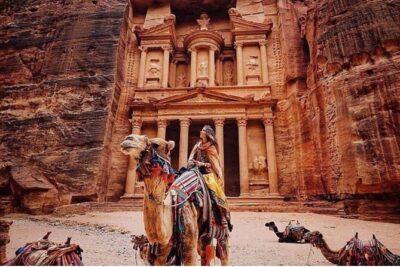
Petra & Wadi Rum: Full Day Private Tour with Hotel Pickup
Read our review →
Private Red Sea Diving for Beginner or Experienced
Read our review →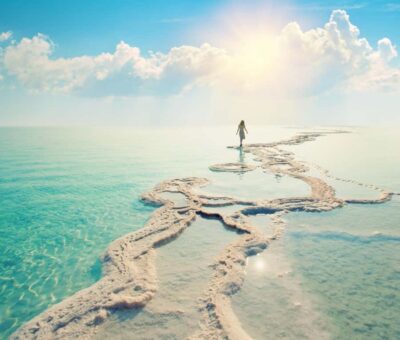
Dead Sea, Nebo, Madaba & Baptism Site Private or Group Tour
Read our review →