
Reviewed · AQABA TOURS
Stargazing Adventure in Jordan
Wadi Rum is one of the best places in Jordan to see the sky go quiet and start doing its real magic. This tour works because you get both the story of the constellations and the tools to actually spot things you would never find on your own. I love the professional astronomers and their step-by-step way of helping you orient by stars, plus the GPS telescopes that point you at galaxies, nebulae, planets, and moons. One thing to keep in mind: the experience depends on sky conditions and darkness, so if you expect a perfect, ultra faint view every time, manage those expectations.
You are picked up from local camps in the Disi Area after dinner, usually around 7:45 PM in winter, and then the night unfolds fast. There is a short seated presentation first, then you split into two groups and rotate mid-show so everyone gets both the laser-guided sky walk and telescope time. If you are the type who likes a calm, educational evening more than a long, wandering night drive, this fits well.
Key Highlights at a Glance
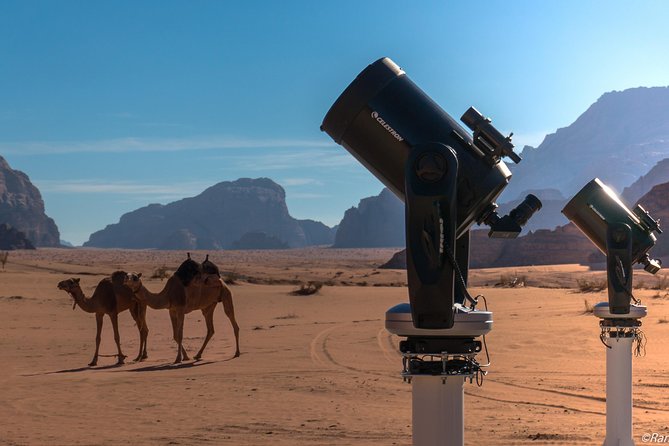
- Two professional-led formats: laser directions and stories, then GPS telescope observing
- Constellations plus zodiac myths: learning how to use the sky as a map
- Targets beyond stars: galaxies, nebulae, planets, and moons through high-powered telescopes
- No desert night driving needed: transfers are included for most local camps
- A time-exposure group photo: you get a keepsake made with sky objects in frame
Why Wadi Rum Works So Well for Stargazing
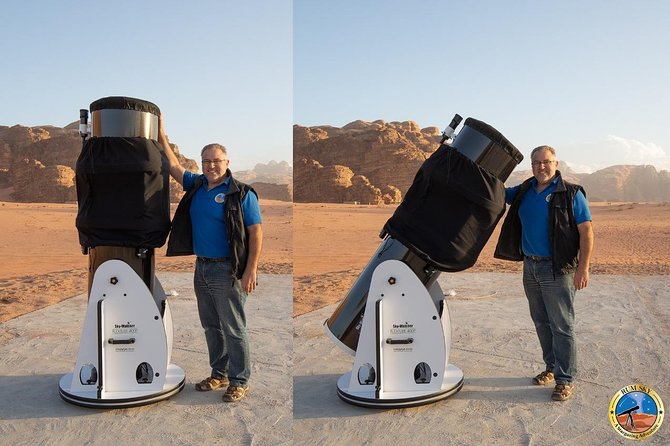
Wadi Rum’s big advantage is simple: less light pollution. When the horizon is dark, even a beginner can start catching real structure in the Milky Way and the shapes of constellations. This tour leans into that. The stars are not treated like a vague background. You are taught how to find them, and then you get to zoom in with telescopes that use built-in guidance (GPS) so you are not guessing.
What I like about this setup is that it caters to two kinds of stargazers at once. If you want the stories and the how-to, the laser session does that. If you want the wow factor of seeing distant objects, the telescope session does that. You do not have to be either an astronomy nerd or a casual night-sky watcher. The show is built for both.
A few more Aqaba days worth comparing
- Wadi Rum Full Day Jeep Tour + Overnight & Dinner in Bedouin Camp
★ 5.0 · 368 reviews - Wadi Rum: Morning or Sunset Jeep Tour
★ 5.0 · 285 reviews - Aqaba: Private Red Sea Diving for Beginner or Experienced
★ 4.9 · 230 reviews
Disi Area Pickup, Night Timing, and the Transfer Advantage
This is not a self-drive situation. You get picked up from camps in the Disi Area, with typical winter pickup around 7:45 PM. The key detail is that they pick you up after your dinner, not before. That matters in the desert, where eating early and traveling in the dark can feel awkward.
The tour runs in a window that shifts by season, and the daily operating hours listed are from 5:00 PM to 11:30 PM. The activity itself is about 1 hour 30 minutes, so you are not committing to a half-night program.
Transfers are included for most of the local camps (you check the list when you book). That is real value in Wadi Rum, where “getting there” can eat time and energy. One more practical note: the group is split into two halves once you arrive, and the maximum group size is listed as 120 travelers. That usually means you are part of a larger group experience, not a tiny private observatory.
The 20-Minute Astronomy Presentation (Seated Hall, Big Screen)
Before anyone walks into the dark, you get an intro talk in a seated hall on a large screen. It runs about 20 minutes. Think of it as your mental warm-up. They set expectations, explain what you will do next, and make the sky feel less random.
This is also where the tour gives you the framework you need for the rest of the night. If you go in knowing nothing, you can still follow along. If you are already curious, you still get a clear path for what to look for first and how the sky “moves” over time.
The presentation style seems to be a strong point. People like that it is easy to follow but not shallow, and that it stays fun while teaching.
Laser-Guided Constellations: Green Beams and Finding Directions
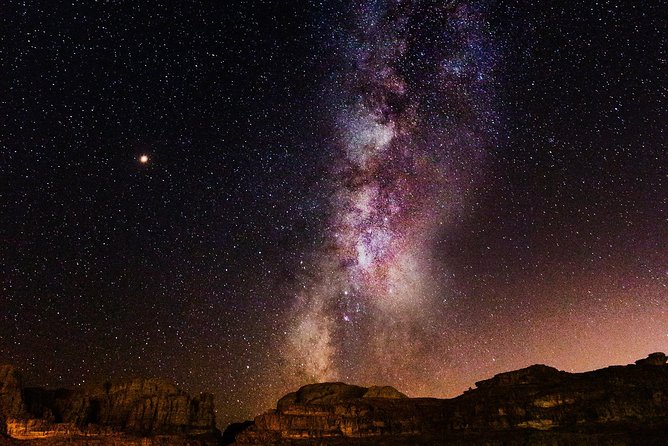
After the intro, you step out and begin the night trek with help from a powerful laser. One of the most memorable details here is the green laser used along with a candle track. That candle track detail matters more than it sounds. In the desert dark, it gives you an immediate, physical reference so you are not constantly asking where the guide is pointing.
In Group 1, you spend about 35 minutes with a professional astronomer focused on the naked-eye sky. Here is what that portion is designed to accomplish:
- You learn how to get directions using the star system
- You understand daily and annual rotation, so the sky is not just pretty, it is predictable
- You follow along with constellations and zodiac-style references
- You hear mythologies from different cultures tied to the constellations
That myth piece is a clever way to make the sky stick in your memory. Even if you forget the technical name later, the story gives you a handle to grab onto.
If you are brand new, this is the part you will probably love most, because it gives you a way to look up and feel like you actually know what you are seeing. It is also handy if you want to practice on your own later.
Then comes the transition. Mid-show, you swap groups so you can try the other format too.
A different kind of day out of Aqaba:
- Journey of Diving or Snorkelling from a Boat
★ 5.0 · 218 reviews - Wadi Rum Cave Camping with Jeep Tour
★ 5.0 · 200 reviews - Wadi Rum: Bedouin Camp Stay,Full-Day Desert Tour with 3Meals
★ 4.9 · 198 reviews - Hot Air Balloon Flight at Wadi Rum
★ 5.0 · 149 reviews
GPS Telescopes for Galaxies, Nebulae, Planets, and Moons
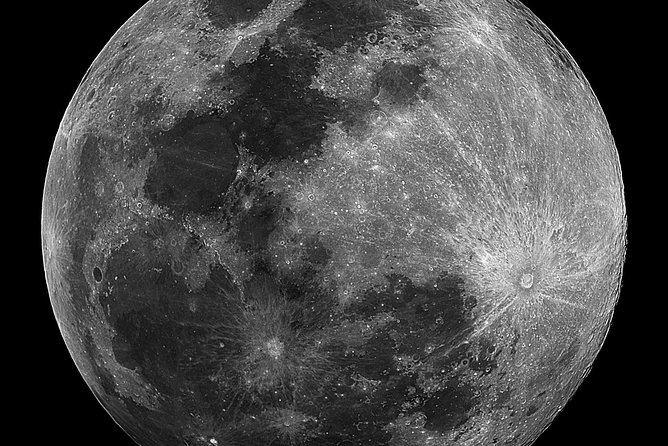
Group 2 is where the tour turns from “map and stories” into “spot and observe.” You spend about 35 minutes at large telescopes equipped with GPS systems. The guidance is the key. It helps the telescopes lock onto targets, so you are not stuck watching a long sequence of searching.
What you can look for includes:
- Galaxies
- Nebulae
- Planets and their moons
A telescope session is also where you learn something practical: how to translate what you heard on the ground into what you see through the lens. The guide is actively directing you, not just handing you an eyepiece. That is what separates a good astronomy night from a frustrating one.
One review highlight that stood out for me: people were impressed by the telescopes themselves, calling them fantastic instruments. There is also mention of getting advice for someone’s own telescope, which suggests at least some of the astronomers or support staff are happy to share tips if you ask good questions.
Still, keep one consideration in mind. A couple of people felt the telescope viewing was weaker than expected. That does not mean the equipment is bad. It often means sky conditions, timing, or expectations were different than they hoped. If you are going specifically for faint deep-sky viewing, go with a flexible mindset and focus on what the guide can actually show you that night.
Switching Groups Mid-Show and the Time-Exposure Photo Moment
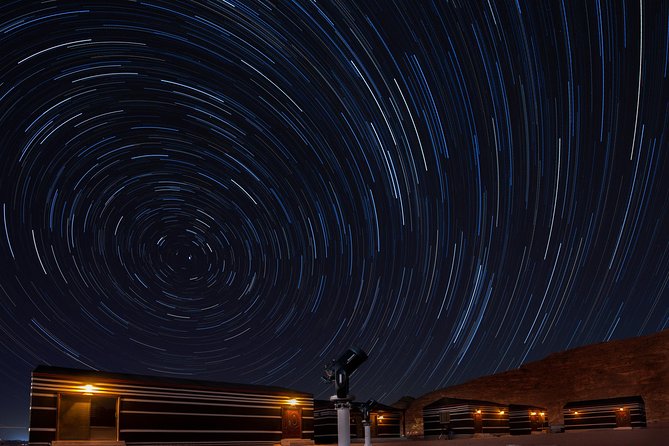
The rotation is a smart design. Group 1 and Group 2 switch at the middle of the show. So you do not end up doing only laser learning or only telescope time. You get both halves, in roughly equal chunks.
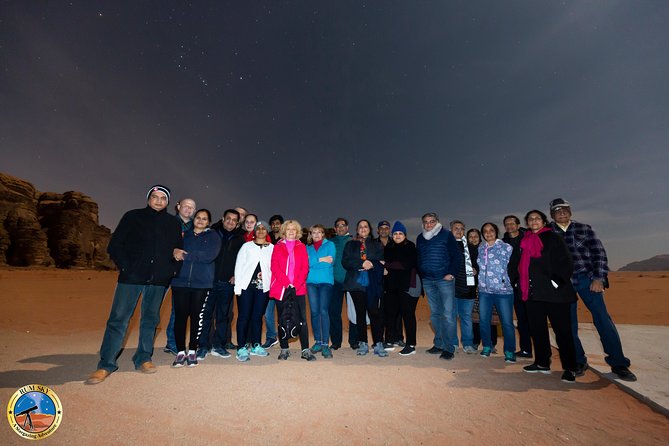
At the end, you take a group photo using a time-exposure technique that highlights sky objects. This is a nice wrap because it turns the night into something shareable without you needing to manage camera settings yourself in the dark. If you are into photography, it is also a useful reference for how long exposures can bring out stars and sky detail.
One practical thought: even though the program is about 1 hour 30 minutes, it is still a desert night. Bring a warm layer. Night temperatures can change fast, and you will be standing around for parts of the show.
Price and Value: What $30 Gets You in Wadi Rum
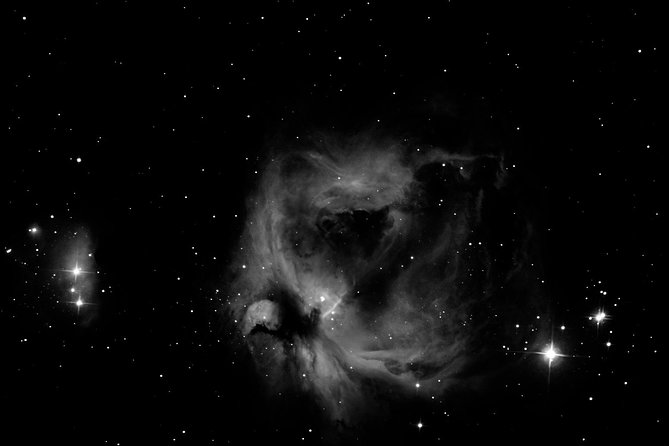
At $30 per person, this is positioned as a budget-friendly way to do real astronomy in Wadi Rum. The value comes from what is included, not just the price tag. You get:
- A presentation on astronomy by a professional astronomer
- Naked-eye stargazing aided with a powerful laser
- Large telescopes with GPS support
- A time-exposure group photo
- Round-trip transfers from most Wadi Rum camps
When a tour includes transport, professional instruction, and telescope access, the cost often feels fair. You are paying for expertise and equipment, plus the group organization that makes it run smoothly in the dark.
One extra signal of popularity: it is booked about 34 days in advance on average. That suggests it is a common choice, so if you are traveling around busy dates, it is wise to plan ahead rather than waiting for last minute.
Weather, Light Pollution, and the Most Common Reason It Feels Different
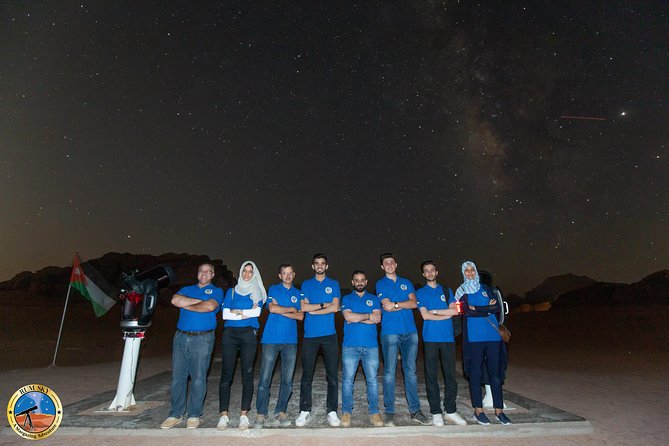
The tour explicitly requires good weather. If conditions are poor, it can be rescheduled or you get a full refund. This matters because stargazing is extremely weather-dependent. Clouds, haze, wind, or humidity can all reduce what you can see, especially with telescopes meant to show smaller targets.
The other factor is darkness. Wadi Rum is low light pollution, but your exact situation still matters. One negative review said the observation area seemed not far from light sources, and that made the laser and telescope views feel less impressive than expected. You cannot control the lighting around camps, but you can control your expectations.
Here is how I would plan mentally:
- If the sky is truly clear, you will likely feel blown away.
- If the sky is good but not perfect, you will still learn a lot and see many clear highlights.
- If the sky is washed out by haze or lights, you may get less of the faint targets you hoped for.
The bright side is that even if telescope views vary, the laser-led constellations and direction finding still work well because they rely on the visible sky. You still come away knowing how to use the stars as a guide.
Who This Stargazing Tour Is Best For
This is an excellent fit for beginners who want more than just “look up.” The laser-led directions and the stories behind constellations make it feel active, not passive.
It also works for couples and small groups who want one guided astronomy night without the hassle of planning. Because pickup is included for most camps, you are not stuck coordinating a drive back in the dark.
If you are traveling with kids or you have mixed skill levels in your group, the two-part structure helps. One half is easy to follow with naked-eye guidance. The other half adds the wow factor of telescopes for those who want more.
If you are an experienced astronomer, you might still enjoy it for the guided targets and the organized photo end, but you should know this is a group show, not a private observing session. The maximum group size is listed at 120, so it is not designed for quiet, one-on-one troubleshooting.
Should You Book This Wadi Rum Stargazing Adventure?
Yes, if you want a well-run, instruction-focused stargazing evening in Wadi Rum that includes both constellation learning and GPS telescope observing. The big reason to book is balance. You do not just stare through a scope, and you do not just hear a lecture. You get both, and you rotate groups mid-show so you experience the full program.
You might skip it, or at least recalibrate expectations, if your top priority is ultra-faint astrophotography-level viewing every time. Weather and darkness matter, and a couple of people felt the telescope portion was not as strong as they hoped. If you are flexible and you treat the night as learning plus a guided sky tour, you will likely be happy with the value.
One more practical tip: dress for cold desert nights and arrive ready to look up for an hour and a half. If you do that, the sky feels like it rewards you.
FAQ
What time does the stargazing pickup usually happen?
Pickup is typically from local camps in the Disi Area around 7:45 PM in winter. Summer times change, so check with the provider for the exact schedule.
How long is the stargazing experience?
The experience runs about 1 hour 30 minutes (approx.).
Is transportation included from Wadi Rum camps?
Transportation is provided free for most local Wadi Rum camps. You should confirm whether your camp is on the pickup list when booking.
What will I see during the telescope portion?
With the GPS-enabled telescopes, you can see targets such as galaxies, nebulae, planets, and moons.
What is included besides stargazing?
You also get a professional astronomer presentation in a seated hall, naked-eye stargazing with a powerful laser, and a group photo using a time-exposure technique.
Is bottled water included?
Bottled water is not included. Water and soft drinks are available at a reasonable cost.
What happens if the weather is bad?
This experience requires good weather. If it is canceled due to poor weather, you will be offered a different date or a full refund.
Recently reviewed around Aqaba
- Wadi Rum Classic 4-Hour Jeep Safari★ 5.0 · 3 reviews
- Wadi Rum 4-Hour Sunset Tour – Wadi Rum Desert Highlights★ 5.0 · 3 reviews
- Petra Shore Excursion Aqaba Port★ 4.5 · 3 reviews
- 2 Days Private Tour to Wadi Rum and Petra from Eilat★ 5.0 · 3 reviews
- Petra Shore Excursion Aqaba Port (01 Day)★ 4.5 · 3 reviews
- 5 Hour Jeep Tour with Meal and Accommodation★ 5.0 · 3 reviews
- Two-Hour Jeep Safari “Wadi Rum Highlights!” w/ Professional Guide★ 5.0 · 3 reviews
- Berenice Beach Club Day Access★ 5.0 · 3 reviews
Aqaba Tours, compared.

Wadi Rum Full Day Jeep Tour + Overnight & Dinner in Bedouin Camp
Read our review →

Private Red Sea Diving for Beginner or Experienced
Read our review →
Bedouin Camp Stay,Full-Day Desert Tour with 3Meals
Read our review →
Full-Day Jeep Tour and Sleeping in cave Night Under the Stars
Read our review →Browse the lists this tour appears in