
Reviewed · JERASH RUINS
Private Tour, Jerash and Amman City Tour
Jerash and Amman in one private day is interesting because you get a full hit of Jordan’s Roman layers in the morning, then shift to Amman’s hilltop mix of Roman, Byzantine, and early Islamic remains later. I especially love how Jerash’s ruins are laid out so well for walking, and I also like the private minivan setup that lets you leave on your schedule instead of waiting around. The one drawback to plan for is that entry fees are not included, so your final total will be higher once you add site tickets.
You’re picked up from your Amman hotel and carried north in a private, air-conditioned vehicle, with bottled water and Wi-Fi onboard. At Jerash, you can go at your own pace or upgrade to include a local guide there. One small caution from real experiences: this can be very driver-led, so if you want deeper explanations, make sure the Jerash guide option is the one you book and confirm your day includes the Roman Theater stop you’re expecting.
Key points worth knowing before you go
- Private, door-to-door Amman pickup and drop-off keeps the day efficient and low-stress
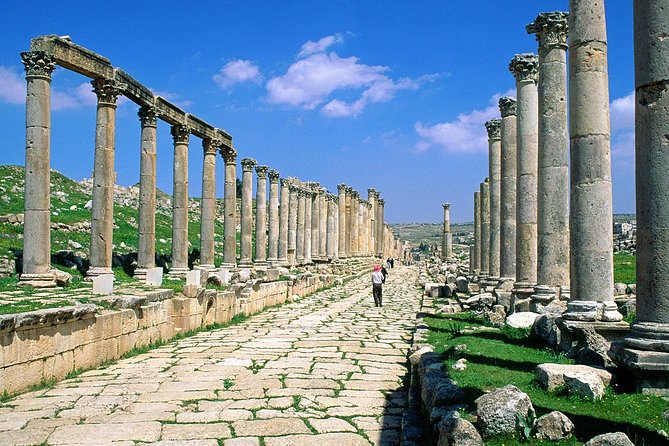
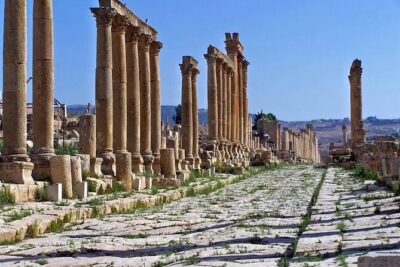
- Jerash is a walkable “best of” Roman city with big landmarks like Hadrian’s Arch and the Oval Colonnade
- Optional Jerash local guide is a smart upgrade if you want context while you’re standing in the ruins
- Amman Citadel gives big views plus remains from multiple eras, including the Roman Temple of Hercules and the Umayyad Palace
- Roman Theater is a standout finish after Jerash, and the souks at the end help you land back in real Amman
- Driver quality can shape the day since this is often more transport plus direction than a full guided tour throughout
Why Jerash and Amman in one private day works
This is one of those “yes, do it in a day” tours, as long as you’re comfortable with a busy but not rushed route. Jerash sits about 50 kilometers north of Amman, and when you only have a single day, it’s a great way to see one of the Middle East’s best-preserved Greco-Roman sites while still getting classic Amman stops after lunch.
The route also makes sense visually. Jerash gives you long colonnades, temples, and huge public spaces. Amman then reframes the story on a hilltop, so you’re not just repeating ruins. You’re moving from Jerash’s monumental city plan to Amman’s layered skyline views from the Citadel area, then ending at the Roman Theater for a more dramatic, hillside setting.
Finally, this tour format is practical. You’re not fighting transportation, figuring out parking, or trying to match bus times. Instead, you’re dropped at the right places, you spend your time walking and looking, and then you ride back. If your goal is “see the big stuff well” rather than “museum marathon,” this works.
More trips to the Jerash ruins:
- Full-Day Tour: Umm Qais, Jerash, and Ajloun from Amman
★ 5.0 · 162 reviews - Private Tour of Ajlun and Jerash
★ 5.0 · 130 reviews - Jerash, Ajloun, Umm Qais Day Trip
★ 5.0 · 99 reviews
Getting out of Amman: private minivan, water, and real timing
Your day starts with hotel pickup in Amman, then a drive north to Jerash in a private, air-conditioned minivan. The distance is about 31 miles, or 50 kilometers, and the route is handled for you. That matters because Jerash is popular, and getting there smoothly is half the battle when you’re not local.
On the vehicle, you get Wi-Fi and bottled water included. It sounds small, but for a longer sit-and-walk day, it helps you avoid the little frustrations that can drain energy fast. Also, the fact that it’s private means you can usually keep your group together more easily, especially if you’re traveling with family or a mixed group of ages.
One more point that comes up in real experiences: many guests praised specific drivers for punctuality and helpful local context. Names that showed up in feedback include Yusuf, Mohammad Bardaghawi, Abu Anas, Saadah, and Mohammed. That’s not something you can guarantee with every booking, but it’s a sign that the service team often takes the “make it easy” part seriously.
Jerash first: walking a Greco-Roman city that still feels human
Jerash is the kind of ruin site that doesn’t just impress you from the outside. It pulls you in because the layout is so readable. You arrive and then spend about 3 hours at the ruins area. You can explore independently, or upgrade to include a local guide at Jerash for more detail while you’re walking the streets.
This city is often called the Pompeii of the East, and the nickname fits in the sense that you get a strong sense of an ancient city plan rather than scattered stones. Jerash was founded around the 2nd century BC, and it became a major Roman city after Roman conquest in 63 BC. It’s part of the Decapolis of the eastern cities, which helps explain why you see so many monumental public buildings.
What I like for first-timers is that Jerash doesn’t force you into a single route. You can wander, pause for photos, and still reach the major sights. You’ll be moving through a mix of arenas, temples, and streets that show how religion and civic life were built into the urban fabric.
Practical tip: wear shoes you can commit to. You’ll be walking for a good stretch on uneven surfaces, and you’ll want to stop often without rushing.
Hadrian’s Arch, Oval Colonnade, and the Temple of Artemis
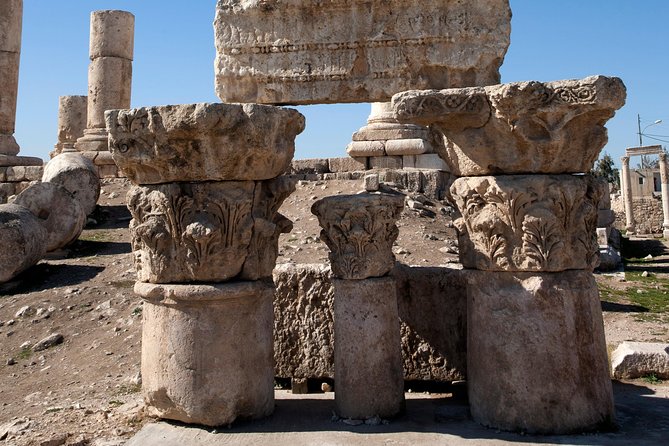
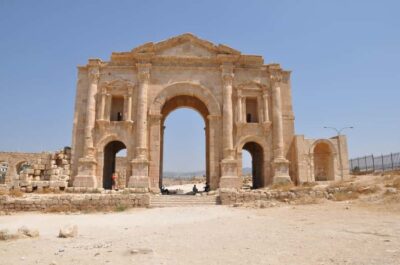
If you only have one word for Jerash highlights, it’s monumental, but the details are what make it memorable. Hadrian’s Arch is built to celebrate Emperor Hadrian’s visit, around 130 AD. It’s a great “anchor” stop because once you’ve seen it, you start to understand Jerash as a planned city, not just a collection of structures.
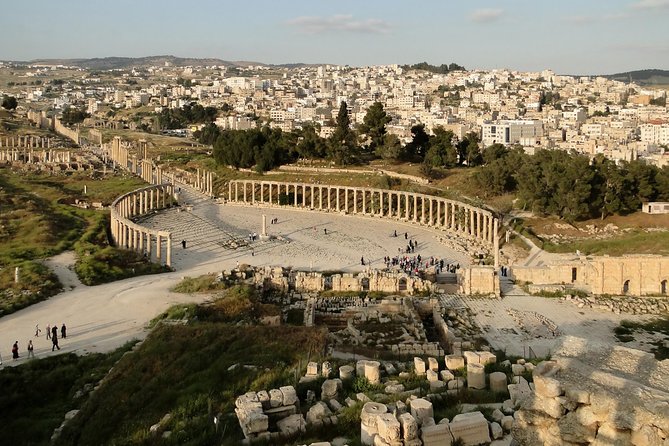
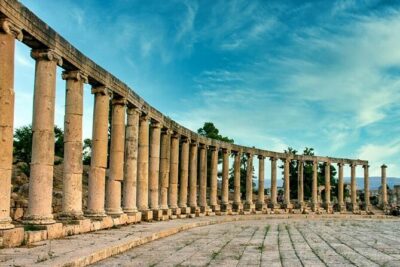
The Oval Colonnade is another must. It’s the kind of long architectural feature that makes your brain go quiet, because it’s both orderly and stunning. This is one of the best places to get your bearings fast, then decide how long you want to linger.
Then there’s the Temple of Artemis. The temple is known for its tall Corinthian columns, described as about 39 feet (12 meters). Even if you only spend a few minutes here, you’ll understand why this site is considered among the best Roman-era temples in the region.
And one fun note from real experiences: some people mentioned entertainment happening in the theater area, including musical demonstrations with bagpipes. You can’t count on a specific performance every day, but it’s a reminder to keep your eyes up. Jerash isn’t only ruins. It can feel like a living stage set.
A few more Amman days worth comparing
- Amman: Petra, Wadi Rum, and Dead Sea 2-Day Tour
★ 4.9 · 1,173 reviews - 2-Day Tour: Petra, Wadi Rum, and Dead Sea from Amman
★ 5.0 · 1,141 reviews - From Amman: Petra & Wadi Rum Private or group Day Tour
★ 4.9 · 750 reviews - From Amman: Petra and Wadi rum Full day Tour
★ 5.0 · 538 reviews
Hippo stadium energy: streets, fountains, and public spaces
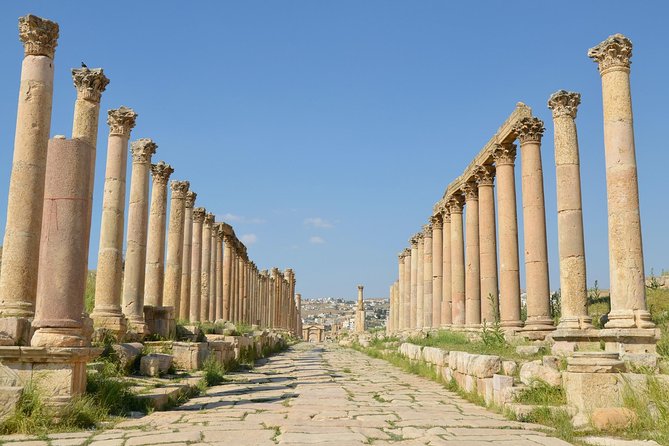
Jerash isn’t all arches and temples. It also shows the “daily” side of Roman public life: movement through the city, gatherings in major arenas, and water features that made the environment feel finished.
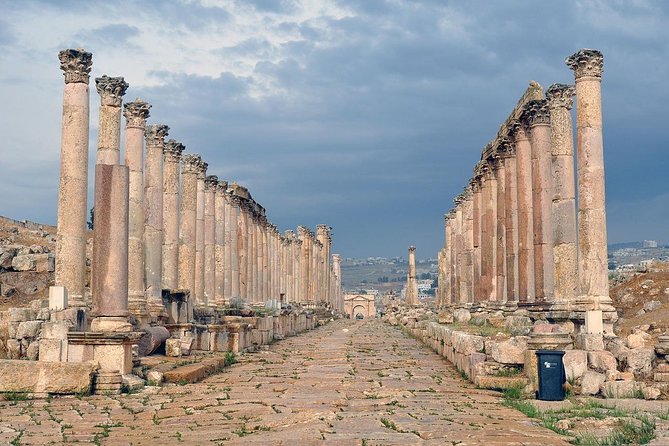
As you walk, you’ll likely pass the Colonnaded Street and see fountains such as the Nymphaeum, an ornamental fountain area. These details matter because they show how urban design worked as more than decoration. A city like this was meant for people to meet, process, and celebrate.
There’s also the Hippodrome, described as a sporting arena that could hold about 15,000 spectators. Even in ruins, arenas like this help you imagine what “public” meant in Roman times. If you like architecture that hints at crowds and energy, Jerash gives you that.
If you add a local guide at Jerash, this is where you’ll get the most value. The guide can connect why each structure sits where it sits and how it fits into the city’s story after Alexander the Great and during Roman growth. If you skip the guide, you can still enjoy everything, but you’ll get more from signage and your own reading.
Back to Amman: Citadel hilltop views and multi-era ruins
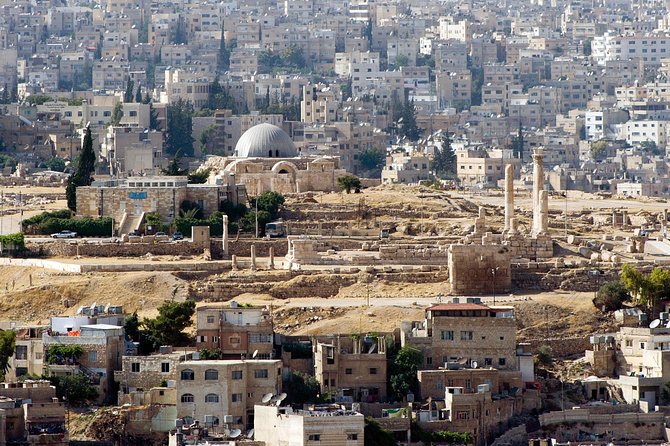
After Jerash, you head back to Amman for a two-hour stretch around the Citadel area. This part of the day is all about altitude and context. The Citadel sits on a hilltop, so you get panoramic views of Amman while you’re walking among layers of the past.
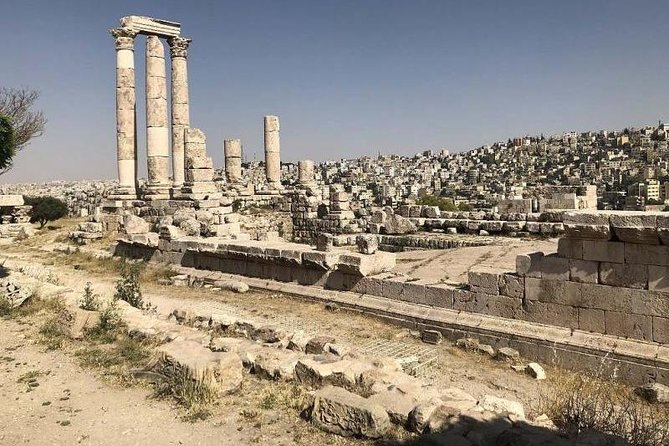
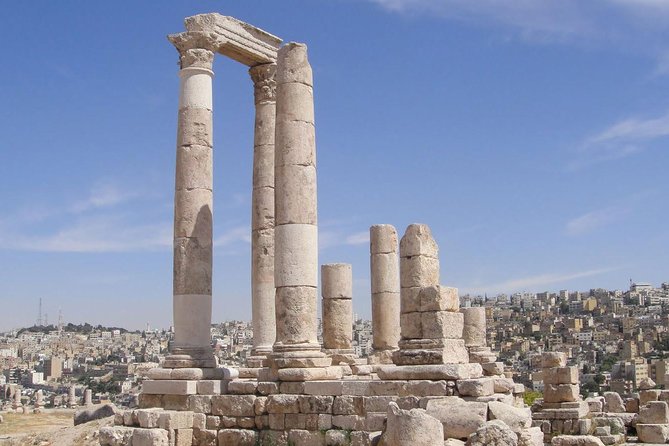
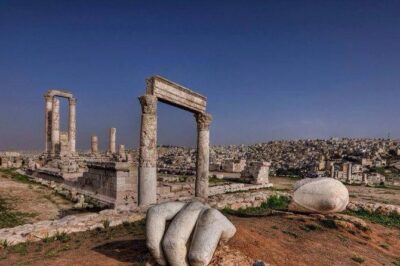
The Citadel is where you see the Roman Temple of Hercules, dating from the 2nd century. It’s a solid stop because it shifts you from Jerash’s city scale to Amman’s skyline-scale story. You also have the Umayyad Palace, described as a crumbled complex from the 8th century. That change in era keeps the day from feeling repetitive.
Amman adds a religious and cultural dimension through the King Abdullah I Mosque, known for its blue-domed landmark look. Even if you don’t go inside (entry rules can vary), the exterior landmark presence gives your photos a sense of modern Amman sitting next to ancient foundations.
The Archaeological Museum is also part of this stop. It’s described as showing classical and Islamic finds from across Jordan. If you’re the type who likes to connect objects to what you just saw outside, this museum helps you make sense of the visual fragments you’ve been walking through.
Roman Theater in Amman: a dramatic finale
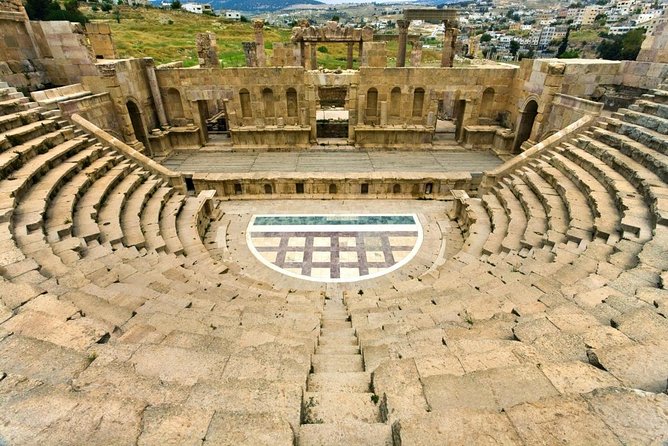
Your final major historical stop is the Roman Theater in Amman, carved into the hillside. It’s described as a 2nd-century theater built around 161 AD under Emperor Antoninus Pius, with seating capacity around 6,000.
This is the kind of site that feels different from Jerash because it’s more “stage” than “street.” The tiered limestone seating and hillside setting make it easier to imagine how performances and public gatherings were experienced from above. It’s restored, and that makes the geometry more readable, especially if you’re taking photos or just want a clean sense of where the audience sat.
One practical note based on real feedback: there was at least one mixed experience where a guest reported they were not taken to the Roman Theater stop. That doesn’t mean it’s a pattern, but it is a reason to confirm your day plan upfront, especially if the Roman Theater is a top priority for you.
The tour finishes with time around downtown Amman traditional souks before your driver returns you to your hotel.
Amman souks at the end: land the plane like a local
This tour doesn’t leave you only in ruins mode. After the Citadel and Roman Theater, you’re taken to downtown Amman so you can see traditional souks. It’s a smart ending because it gives you a change of pace right when you might otherwise feel museum-logged.
You can browse and snack and watch daily life flow. It also helps you remember that Amman is still very much a city, not a theme park built around history. Even if you buy nothing, the souks are where you get your bearings for the rest of your trip.
If you’re planning your photos, save some energy for this last part. Jerash will exhaust your legs, the Roman Theater will exhaust your imagination, and the souks are where you can reset.
Price and value: what $83 gets you, and what to budget next
At $83 per person, this tour is priced as a private, door-to-door day with transportation included. You get bottled water, Wi-Fi on board, and hotel pickup and drop-off. You also have the flexibility of doing Jerash independently or paying extra for a local guide upgrade at Jerash.
What’s not included is the key variable: entry fees to sites. The itinerary indicates admission tickets are not included for Jerash, the Citadel, and the Roman Theater stops. So you should budget for entrance costs on the day, even if you’re not sure of the exact total yet.
Here’s how I think about value. You’re paying for three big things:
1) private transport between sites without hassle
2) enough guided structure to hit the major highlights in one day
3) a choice to add interpretation at Jerash if you want it
If you want a guided narrative all day long, you may still feel limited because this is often driver-led and not necessarily a dedicated guide for every stop unless you add the Jerash guide option. If you’re happy reading on-site and enjoying the architecture with occasional context, it’s strong value.
Also, the average booking window is about 40 days in advance. That suggests it’s a popular route. If you’re traveling in peak season or on a tight schedule, booking earlier can help you lock in a time that fits your itinerary.
Who should book this Jerash and Amman private tour
I’d recommend this tour if you want:
- a single-day overview of Jerash plus Amman’s top classical stops
- private transport that reduces stress and saves time
- the option of a Jerash local guide for deeper meaning while you’re walking
It’s also a good fit for first-timers in Amman who want their bearings fast. Several guests mentioned it works well as a first day in Jordan, especially when you’re trying to learn the city quickly and see the most famous antiquities efficiently.
If you’re a hardcore site scholar and want extended guided time in museums and smaller corners, you might find the day brisk. But for most people, it’s the right balance of big highlights and real time outdoors.
If your group includes people who need fewer steps, plan on doing short rest breaks inside Jerash and choosing slower routes where possible. The tour timing gives you a framework, but how long you pause is in your hands.
Should you book this tour?
Yes, with two conditions. First, plan extra money for site entry fees, since they’re not included. Second, if you care about commentary and story, choose the option that includes a local guide at Jerash, and confirm your day includes the Roman Theater stop.
If you want a stress-free, private day that hits Jerash’s top monuments, then shifts into Amman’s Citadel views and Roman Theater, this is an easy recommendation. You’ll leave with photos that actually tell a story, plus a stronger sense of how Jordan’s Roman past sits next to its living city today.
FAQ
Are entry fees to Jerash and the other sites included?
No. Entry fees to the sites are not included. The tour lists admission tickets as not included for the Jerash and Amman stops.
Is hotel pickup and drop-off included?
Yes. The tour includes hotel pickup and drop-off in Amman.
Can I add a local guide at Jerash?
Yes. A local guide at Jerash is listed as an optional upgrade depending on the option you select when you book.
How long is the tour?
It runs about 5 to 8 hours.
Is this a private tour?
Yes. It is private, meaning only your group participates.
Can I get a full refund if I cancel?
You can cancel for a full refund if you cancel up to 24 hours before the experience starts.
Is Wi-Fi and bottled water included?
Yes. Bottled water and Wi-Fi on board are included.
Recently reviewed around Amman
- Private Full Day Tour to Umm Qais and Ajloun from Amman★ 4.0 · 3 reviews
- Private Half-Day Ma’in Waterfalls and Hot Springs Tour from Amman★ 5.0 · 3 reviews
- Petra private day tour from Amman★ 5.0 · 3 reviews
- Kings Way Private tour★ 4.5 · 3 reviews
- Jordan Pass 4-Night Private Cultural Tour: Jerash, Petra, and Wadi Rum Overnight★ 5.0 · 3 reviews
- Private Guided Umm Quais and Jerash tour with lunch★ 5.0 · 3 reviews
- Private Tour: Jerash and Umm Qais Day Trip from Amman★ 4.0 · 3 reviews
- Private Tour: Full Day Trip of Jerash, Umm Qais, and Pella from Amman★ 4.5 · 3 reviews
Jerash Ruins, compared.
Full-Day Tour: Umm Qais, Jerash, and Ajloun from Amman
Read our review →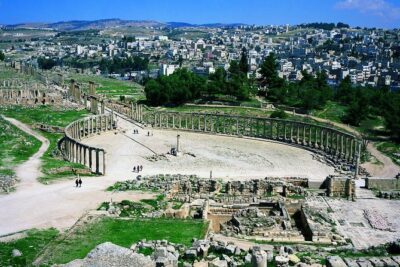
Private Jerash, Ajloun Castle, and Umm Qais Tour
Read our review →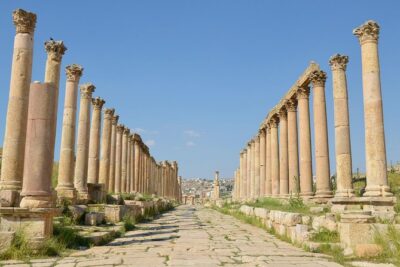
Browse the lists this tour appears in