
Reviewed · HISTORICAL TOURS
8 Days Jordan Historical & Sightseeing Private Tour
Jordan is interesting because you get a rare mix of big-name icons and layered history, all in one trip, without constantly re-planning your day. This private 8-day route works because it connects Amman, Petra, Wadi Rum, Aqaba, and the Dead Sea with guided stops that actually explain what you are seeing.
I especially like two things. English-speaking guides handle the heavy hitters (Jerash and Petra), so you spend more time enjoying and less time guessing. And I like that so many costs are already handled for you, including entrance fees, key meals, and the Jordan entry visa.
One possible drawback: the schedule is full. Petra is a long day, and you will be moving between regions, so you will want comfortable walking shoes and a moderate fitness level.
Key highlights
- English guiding where it matters most: Jerash has a local English guide, and Petra is guided for the lower parts
- Roman Jerash plus medieval Ajloun: from the city of the thousand columns to Saladin-era fortress vibes
- Mount Nebo and Madaba mosaics: biblical sites plus 6th-century Byzantine tilework in one smooth flow
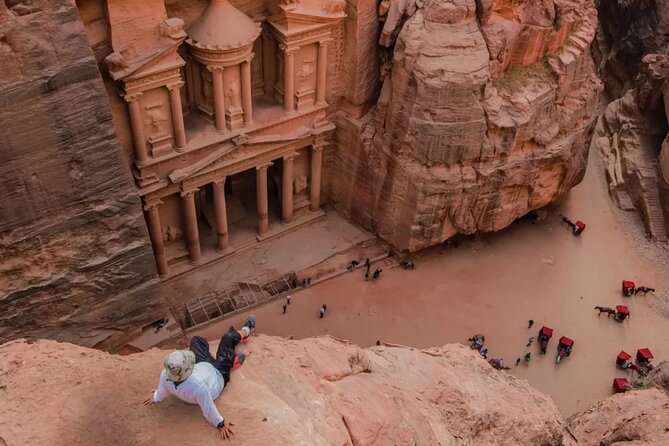
- Petra the right way: Siq walk with the water system and a focus on the Treasury area
- Wadi Rum with real Bedouin tea: sage and sugar tea before a 4×4 ride through protected desert wilderness
- Dead Sea day built for doing nothing: the lowest point on earth plus float-friendly salt water
The Private Jordan Route That Balances Icons and Context
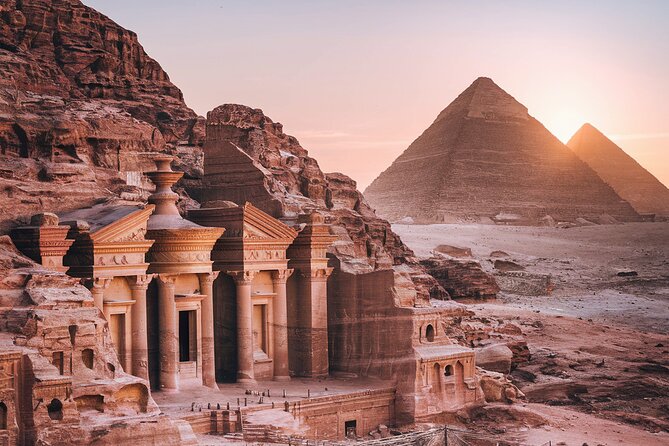
If you want Jordan with less stress, this style of private tour is a smart fit. You get A/C private vehicles for the long drives, structured sightseeing time for the major sites, and guides who put landmarks into words you can remember later.
I also like how the trip mixes types of travel. You get city archaeology in Amman and Jerash, Crusader and medieval layers in Ajloun and Karak, and then the cinematic landscapes of Petra, Wadi Rum, and the Dead Sea. It is the kind of route that feels like it has momentum, not like you are waiting around for something to happen.
The other advantage is that you are not left to piece together ticket lines and entrances. Entrance fees and key items are included, which helps you keep your day moving.
More historical tours out of Amman:
- Amman: Culture, History, Tradition & Food Day or Night Tour
★ 5.0 · 124 reviews - Amman Heritage Tour: Street Food, Local Culture & Art
★ 5.0 · 21 reviews - Journey Through Jordan’s History Tour
★ 5.0 · 16 reviews
Day 1 in Amman: Airport Arrival That Gets You to Real Rest
Your first morning starts with something small but valuable: a representative meets you at Queen Alia International Airport with a sign that has your family name. You are then transferred to your Amman hotel in about 30 minutes, so the day does not evaporate into logistics.
After check-in, the plan is simple, rest and refresh. That matters because the next days are long and walking-heavy, even if you keep the pace comfortable.
Jerash, Ajloun Castle, and Amman’s Citadel, Roman Theatre Facts You Can Actually Use
Jerash is the kind of place where your eyes keep finding new details. You see the Greco-Roman city ruins known as the city of the thousand columns, and it is one of the most well-preserved Roman architecture sites outside Italy. When you walk through ruins like this, you start noticing scale fast, the kind of place where buildings were built to last and crowd life was part of the design.
Ajloun Castle adds a totally different feel. This fortress is one of the best-preserved examples of medieval Arab military architecture in the Middle East. It is tied to Saladin-era history, and it sits in a landscape change that is surprisingly dramatic: as you drive north, the scenery shifts from desert dryness to greener zones with pine forests and olive groves. That contrast makes the stop feel like more than just a photo break.
Back in Amman, you visit the Citadel, on an L-shaped mountain peak. It is a site you visit for the long timeline, since Amman has been inhabited for about 7,000 years. And the views are a big part of the payoff, you get a clear look at the seven mountains that shape the city.
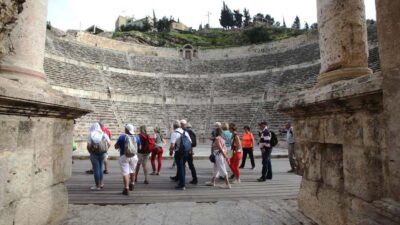
Then you see the Roman Theatre, visible from the citadel. It is a steep, hillside-built amphitheater that could seat around 6,000 people, and it was oriented north to keep the sun off spectators. That detail is useful because it reminds you that ancient builders planned for comfort, not just spectacle.
What to watch for: Jerash and Amman days add up to a lot of steps. If you tend to get sore easily, plan to take short breaks instead of powering through.
Mount Nebo, Madaba Mosaics, Wadi al-Mujib, and Karak Castle on the King’s Highway
This day runs along the King’s Highway route and leans into spiritual sites, Byzantine art, and medieval strongholds. It is one of the best blends for people who like to connect places to stories, but also want real scenery time.
Mount Nebo is a pilgrimage site for Christians, and it is also associated with the belief that Moses is buried there. Even if you do not follow the religious tradition closely, the location gives you a sense of why people return to a place again and again.
Next is Madaba, often called the city of mosaics. You visit St. George Greek Orthodox Church, where you can see the Byzantine mosaic map of the Holy Land from the 6th century. It shows Jerusalem and other cities, and it is the kind of art where you immediately understand why maps mattered before modern navigation.
Madaba also includes the Archaeological Park, with remains of Byzantine churches. The mosaics in the Church of the Virgin are highlighted as a major draw, so you are not just seeing one museum piece, you get the wider context of how these churches were built.
Then you shift to views at Wadi al-Mujib, a deep valley area known for its scenery. The time is shorter here, but it breaks the day up nicely so you are not only moving from one indoor or ruined site to another.
Finally, Karak Castle brings the medieval energy. This is described as the largest late Islamic castle in Jordan, and also one of the largest Crusader fortresses in the Levant region. Karak sits about 1,000 meters above sea level, surrounded on three sides by deep valleys, and the town layout on a triangular plateau goes back to the Ottoman period. When you walk narrow streets and see crumbling buildings, it really can feel like the area is wearing its age openly.
What to watch for: Carves into steep terrain and castle stairways. If your knees are not great, take your time on the approaches and use railings when available.
A few more Amman days worth comparing
- Amman: Petra, Wadi Rum, and Dead Sea 2-Day Tour
★ 4.9 · 1,173 reviews - 2-Day Tour: Petra, Wadi Rum, and Dead Sea from Amman
★ 5.0 · 1,141 reviews - From Amman: Petra & Wadi Rum Private or group Day Tour
★ 4.9 · 750 reviews - From Amman: Petra and Wadi rum Full day Tour
★ 5.0 · 538 reviews
Petra with a Private English Guide: Siq to the Treasury and the Lower Parts
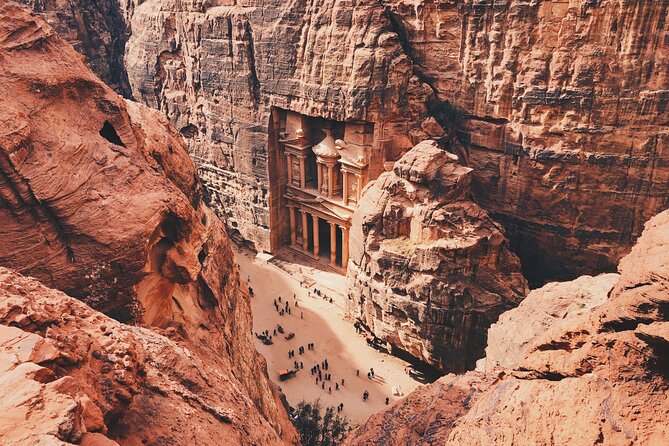
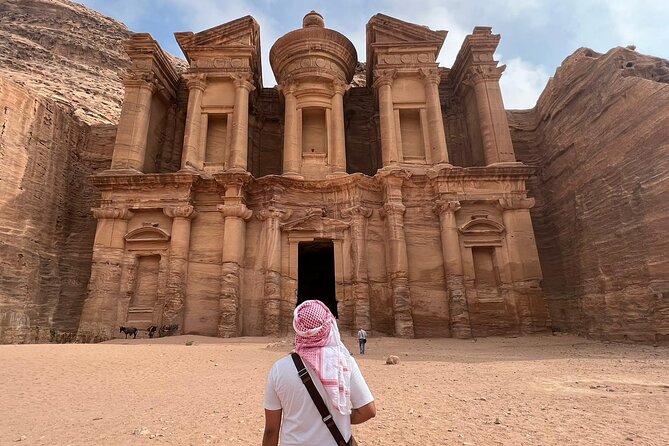
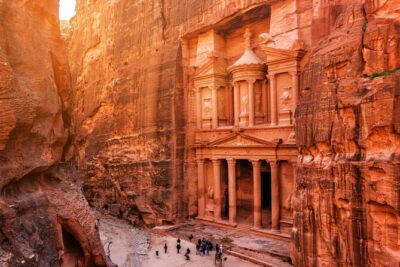
Petra is the headline, and this plan gives you a guided experience that is built around the main star moments. You walk through the Siq, a narrow gorge filled with ancient relics of gods, and the gorge also has a sophisticated water system built along the sides. That detail matters because it helps you read the Siq as engineering, not just scenery.
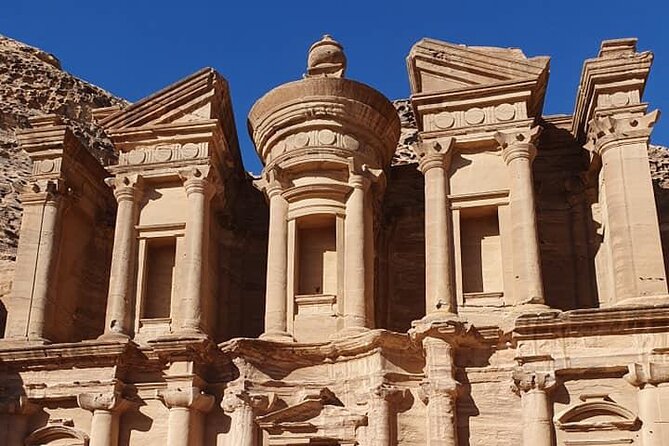
The walk gradually reveals Petra in layers, and you arrive at the Treasury, the spot that people know from photos. It is called out as a highlight because the setting does feel movie-like, with sun rays hitting the carved stone. After that, you enter a wider part of Petra where houses, theaters, tombs, and facades spread out across the sandstone city.
This is where having a private English guide for the lower parts of Petra becomes useful. The guide can point out what you are looking at and what it likely meant to the people who lived there. You get about two hours with the private guide, while the rest of the day is yours to explore within the time window.
What to watch for: Petra is a long, tiring day even when you have a guide. You spend hours walking, and the heat can be real. I recommend planning water and snacks ahead of time, and wearing shoes you trust.
Wadi Rum Protected Desert, Bedouin Tea, and a 4×4 Jeep Safari
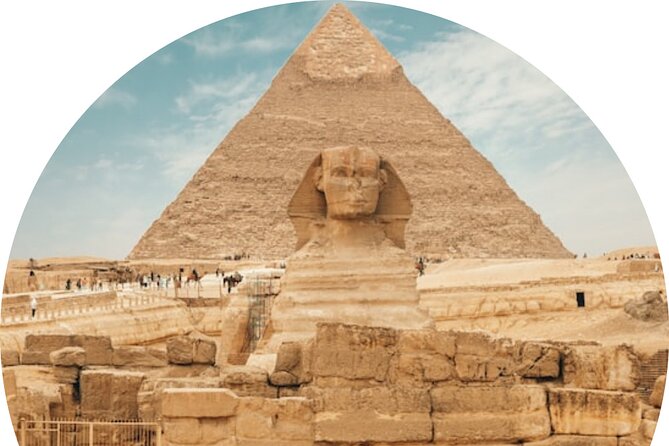
Wadi Rum is the kind of place where the landscape keeps changing even when you stay in the same area. The protected area covers about 720 square kilometers, and you see huge sandstone and granite mountains rising out of dramatic desert wilderness.
A highlight here is the welcome. You meet a Bedouin friend at his home for traditional Bedouin tea made with fresh sage and sugar. It is a small moment, but it is a good switch from pure sightseeing mode into real human exchange.
After a short rest, you go out exploring in the back of a 4×4 truck. This is where the scale of Wadi Rum hits you. It is easy to see why T. E. Lawrence described it as vast, echoing, and godlike. The ride gives you a moving viewpoint, so you are not staring at one stretch of sand for hours.
The tour also includes a complementary two-hour jeep safari in Wadi Rum. In practice, it means you get a meaningful chunk of time focused on the best desert driving routes, not only a quick ride and back to the camp.
What to watch for: Desert mornings and afternoons can vary a lot in temperature. Bring layers even if the sky looks clear.
Aqaba Castle, an Ancient Church, Ayla Ruins, and Real Time by the Sea
Aqaba is a nice shift from inland deserts. It gives you coastal energy after days of rock and sand, and it breaks up the trip so you do not feel like you are just chasing ruins.
You start with Aqaba Castle, tied to pilgrimage history with stops along the Northern Way. Then you visit Aqaba Church, described as the oldest known purposely built church of the world, making it a significant historical location. After that, you explore Ayla, one of the oldest Islamic cities founded around 650, and you visit its ruins and architecture.
Then you get back to your hotel for free time and an overnight. This is important because not every day needs more walking. You can use this slot to recharge and enjoy Aqaba at your own pace.
What to watch for: Aqaba days are shorter on paper, but the logistics of travel and check-in still take time. If you want beach time, plan for it during the free portion.
The Dead Sea: Lowest Point on Earth, Salt Water That Changes How You Feel
The Dead Sea day is built for relaxation, not sightseeing marathons. You drive to the Dead Sea region, described as the lowest point on earth at about 423 meters below sea level.
Then you get free time to enjoy the salty water, which is said to be about four times saltier than normal seawater. It is buoyant and mineral-rich, and the plan is simple: float on your back and soak in the sun.
This is the most different day on the itinerary. After Petra and Wadi Rum, it feels almost luxurious to do almost nothing. The tour even frames the experience as an easy day, with time to read, rest, and enjoy the odd sensation of staying afloat without effort.
What to watch for: Salt water can irritate eyes and skin if you are not careful. Bring swim goggles if you have them, and rinse afterward.
Price and What You Actually Get for About $1,253 per Person
At $1,253.43 per person for an 8-day private tour, the price is not low. But it is also not just a ticket to sites. You are paying for a lot of what usually becomes expensive or annoying on your own trip.
Here is what is included that improves value:
- Accommodation at hotels on a bed and breakfast basis, plus breakfast and dinner at the Wadi Rum desert camp
- Dinner included (not only breakfast), which matters in Jordan when you would otherwise spend time choosing restaurants
- Transportation in modern A/C private vehicles for long drives between regions
- Airport pickup and drop-off
- Guiding for key cultural anchors: local English guide in Jerash for two hours, English-speaking guides at Amman Citadel, and a private English guided tour of Petra for about two hours focused on the lower parts
- Entrance fees for sightseeing stops
- Jordan entry visa included
- All fees and taxes included
- Two hours complementary jeep safari in Wadi Rum
Tipping and personal expenses are not included, so you still need a plan for that. Also, meals and beverages not mentioned are on you.
For who this feels like strong value: if you want a private plan, want English guidance at the big sites, and would rather spend your energy walking and looking instead of budgeting every entrance and ticket line.
Who This Tour Fits Best, and When to Choose Another Option
This is a great match if you want Jordan in one organized sweep and you appreciate a guide’s interpretation, especially for Petra and Jerash. It is also a good fit for people who like history but do not want to become a mini scholar before arriving.
It is less ideal if you crave long free days in each place, since the itinerary is structured and full. You also need moderate physical fitness since you are walking and moving through ancient sites with uneven terrain.
Should You Book This Private Historical and Sightseeing Tour?
I would book this tour if you want Jordan with less friction and more explanation. The included entrance fees, visa, and the English guiding at the big anchors (Jerash and Petra) reduce the usual headaches, and the route hits the most iconic landscapes without skipping the in-between layers.
I would pause if you know you prefer slower travel with lots of independent time, or if you are not comfortable with long walking days like Petra. For most people who want a well-paced but still packed week, this private setup is a strong choice.
FAQ
What does the 8-day Jordan tour include in terms of destinations?
You will cover Amman highlights, Jerash, Ajloun, Madaba, Mount Nebo, Karak Castle, Petra, Wadi Rum, Aqaba, and the Dead Sea, with airport transfers included.
Is airport pickup and drop-off included?
Yes. The tour includes airport pickup and drop-off, and you are met on arrival at Queen Alia International Airport with a sign using your family name.
Are the guides English-speaking at the main sites?
Yes. It includes a private English guided tour of Petra (covering the lower parts for about 2 hours), a local English-speaking guide in Jerash for 2 hours, and English-speaking local guides at Amman Citadel.
Do you get a jeep safari in Wadi Rum?
Yes. The tour includes a 2-hour complementary jeep safari in Wadi Rum.
What meals are included?
Breakfast is included for 7 days. Dinner is included, including dinner during the desert camp stay in Wadi Rum. Meals and beverages not mentioned are not included.
Is the Jordan entry visa included?
Yes. Entry visa to Jordan is included, along with all fees and taxes.
How far in advance can I cancel for a full refund?
You can cancel up to 3 days in advance of the experience for a full refund. If you cancel less than 3 full days before the start time, the amount paid is not refunded.
Recently reviewed around Amman
- Private Full Day Tour to Umm Qais and Ajloun from Amman★ 4.0 · 3 reviews
- Private Half-Day Ma’in Waterfalls and Hot Springs Tour from Amman★ 5.0 · 3 reviews
- Petra private day tour from Amman★ 5.0 · 3 reviews
- Kings Way Private tour★ 4.5 · 3 reviews
- Jordan Pass 4-Night Private Cultural Tour: Jerash, Petra, and Wadi Rum Overnight★ 5.0 · 3 reviews
- Private Guided Umm Quais and Jerash tour with lunch★ 5.0 · 3 reviews
- Private Tour: Jerash and Umm Qais Day Trip from Amman★ 4.0 · 3 reviews
- Private Tour: Full Day Trip of Jerash, Umm Qais, and Pella from Amman★ 4.5 · 3 reviews
Historical Tours, compared.
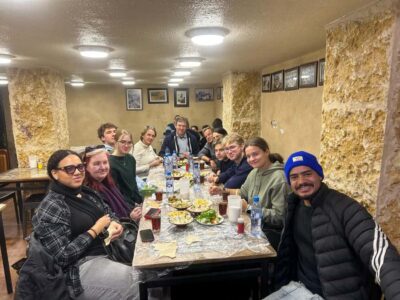
Culture, History, Tradition & Food Day or Night Tour
Read our review →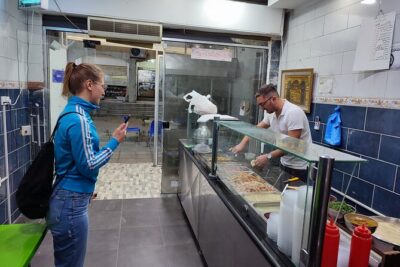
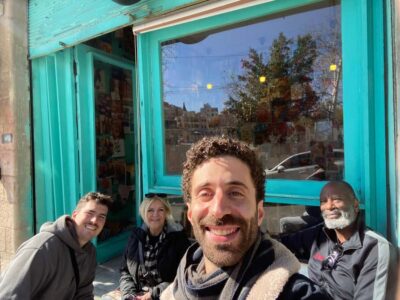
Amman Heritage Tour: Street Food, Local Culture & Art
Read our review →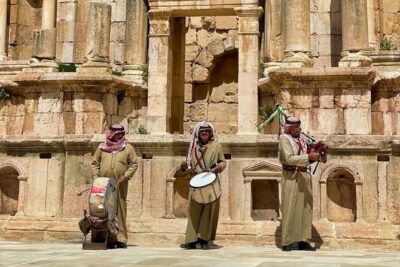
Amman Tour : Historical places, Food, markets ,Hidden Gems
Read our review →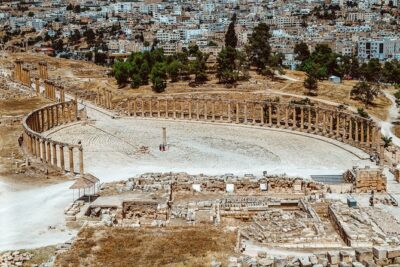
4-Night Private Jordan Cultural Tour: Jerash, Petra, and Wadi Rum Overnight
Read our review →Browse the lists this tour appears in